
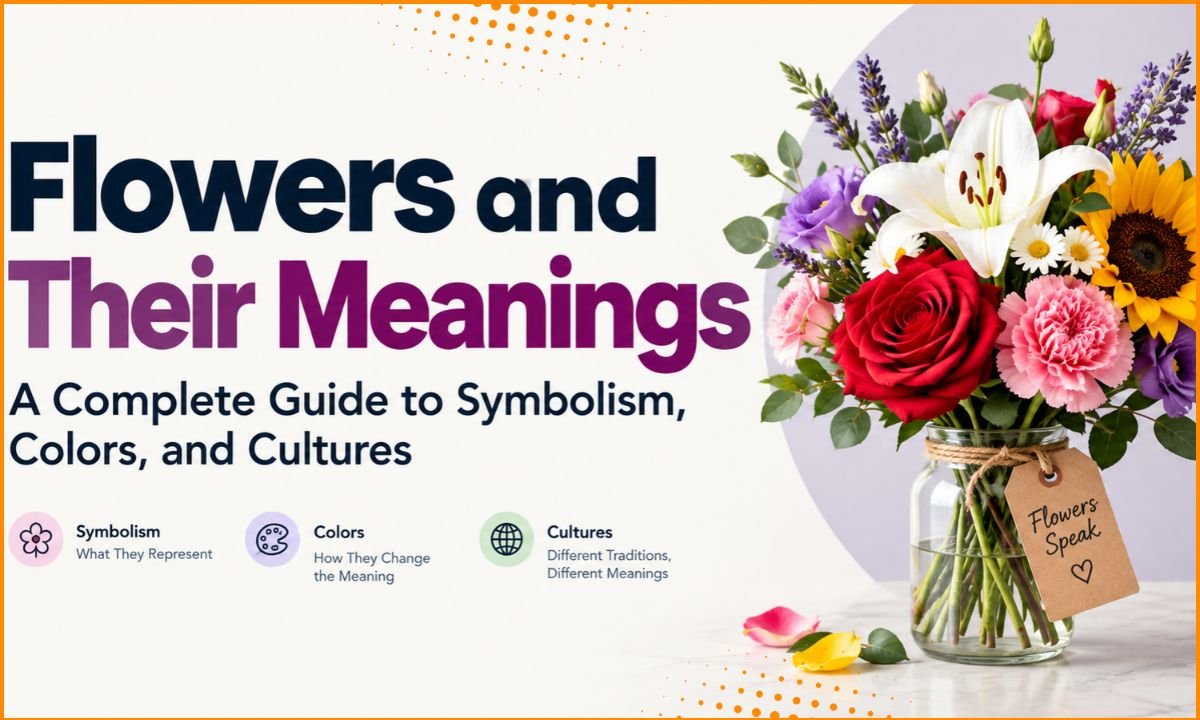
Flowers and their meanings are the symbols people have attached to blooms over centuries. A red rose often stands for love. A white lily usually points to purity or sympathy. A yellow daffodil signals a fresh start.
These meanings come from history, religion, myth, and folk tradition. They are not strict rules, and they change from one country to another. This guide explains the most common meanings, shows how color changes them, and helps you pick the right bloom for any moment.
What Are Flower Meanings?
Flower meaning is the idea, feeling, or message a flower is believed to carry. The practice of reading flowers as a kind of secret language is called floriography. It became very popular in Victorian England and America in the 1800s. People used small bouquets, called tussie mussies, to send messages they could not say out loud.
Printed flower dictionaries from that period listed one meaning per flower. Those books did not always agree with each other. That is why you may see two different meanings for the same bloom today.
💡 Tip: Treat flower meanings as traditions, not facts. Pick the meaning that fits your culture, your relationship, and your own feelings.
Quick Chart: Flowers and Their Meanings
This chart covers the flowers people search for most. It uses the most widely accepted traditional meanings.
| Flower | Main Meaning | Common Use |
| Rose | Love, beauty, appreciation | Romance, anniversaries |
| Tulip | Perfect love, cheerfulness | Spring gifts, Valentine’s Day |
| Lily | Purity, renewal, sympathy | Weddings, funerals, Easter |
| Sunflower | Loyalty, adoration, warmth | Friendship, summer gifts |
| Daisy | Innocence, new beginnings | Casual gifts, baby celebrations |
| Carnation | Admiration, affection | Mother’s Day, graduations |
| Orchid | Luxury, strength, refined beauty | Gifts, home décor |
| Peony | Prosperity, romance, good fortune | Weddings, anniversaries |
| Daffodil | New beginnings, hope | Spring, recovery gifts |
| Lavender | Calm, devotion, serenity | Relaxation, keepsakes |
| Hydrangea | Gratitude, heartfelt emotion | Thank you gifts, weddings |
| Iris | Wisdom, hope, faith | Sympathy, congratulations |
| Lilac | First love, youth | Spring bouquets |
| Chrysanthemum | Joy, longevity (US and Asia) | Fall displays, birthdays |
| Marigold | Warmth, creativity, remembrance | Fall gardens, Day of the Dead |
| Poppy | Remembrance, sleep, imagination | Memorial Day, veteran tributes |
| Violet | Faithfulness, modesty | February birthdays |
| Forget me not | True love, remembrance | Memorials, keepsakes |
| Gardenia | Purity, secret love | Corsages, weddings |
| Freesia | Friendship, trust | Thoughtful gifts |
| Zinnia | Thoughts of absent friends | Long distance friendships |
| Snapdragon | Grace, strength (also deception) | Garden borders, mixed bouquets |
| Lotus | Rebirth, purity, enlightenment | Spiritual art, tattoos |
| Jasmine | Grace, elegance, sensuality | Weddings, fragrance |
See More: Wholistic vs Holistic Meaning
Flowers and Their Meanings by Color
Color changes the message more than almost anything else. The same flower can mean different things in red, white, or yellow. Here is how each color is usually read.
Red Flowers and Their Meanings
Red is the color of love, desire, and courage. Red flowers are the classic romantic gift in the United States.
- Red rose: Deep love, passion, respect.
- Red tulip: A declaration of love.
- Red carnation: Strong admiration and deep affection.
- Red poppy: Remembrance of fallen soldiers, sleep, and peace.
- Red camellia: Passion and devotion.
- Red gerbera: Cheerful, energetic love.
White Flowers and Their Meanings
White stands for purity, peace, innocence, and new starts. It is also a common color for sympathy.
- White rose: Purity, reverence, a fresh start.
- White lily: Purity, renewal, comfort in grief.
- White tulip: Forgiveness and respect.
- White daisy: Innocence and honesty.
- Gardenia: Purity and secret love.
- Jasmine: Grace and sweetness.
- White chrysanthemum: Truth and honesty in the US, but mourning in many parts of Europe and Asia.
Yellow Flowers and Their Meanings
Yellow is linked to sunshine, joy, and friendship. In the Victorian era it sometimes carried darker meanings, so context matters.
- Yellow rose: Friendship and joy today. In Victorian books it could mean jealousy.
- Sunflower: Adoration, loyalty, and long life.
- Daffodil: New beginnings, hope, and rebirth.
- Yellow tulip: Cheerful thoughts.
- Yellow carnation: Disappointment or rejection in older flower dictionaries.
- Buttercup: Childhood and cheerfulness.
Pink Flowers and Their Meanings
Pink is softer than red. It speaks of gratitude, grace, and gentle affection.
- Pink rose: Admiration, thanks, and sweetness.
- Pink peony: Romance, prosperity, and happy marriage.
- Pink carnation: Gratitude and a mother’s love.
- Pink tulip: Caring and good wishes.
- Cherry blossom: The brief beauty of life.
- Pink hydrangea: Heartfelt emotion and sincerity.
Orange Flowers and Their Meanings
Orange shows energy, enthusiasm, and warmth. It sits between the passion of red and the friendliness of yellow.
- Orange rose: Desire, excitement, and enthusiasm.
- Marigold: Warmth, creativity, and remembrance.
- Orange lily: Confidence and passion.
- Orange tulip: Energy and warm feelings.
- Zinnia: Lasting affection and thoughts of absent friends.
- Nasturtium: Victory and a playful spirit.
Purple Flowers and Their Meanings
Purple has long been tied to royalty, mystery, and spirituality. It also appears in messages about admiration and first love.
- Lavender: Calm, devotion, and serenity. Victorian sources sometimes read it as distrust.
- Lilac: First love and youthful innocence.
- Iris: Wisdom, faith, and hope.
- Purple tulip: Royalty and elegance.
- Violet: Faithfulness and modesty.
- Wisteria: Long life and welcome.
- Purple hyacinth: Sorrow and a request for forgiveness.
Blue Flowers and Their Meanings
Blue flowers are less common in nature, so they often feel special. They usually stand for calm, trust, and deep feeling.
- Forget me not: True love and faithful memory.
- Hydrangea: Gratitude, though some Victorian books linked it to boastfulness.
- Delphinium: Openness and an ardent heart.
- Cornflower: Hope and delicacy.
- Blue iris: Faith and wisdom.
- Agapanthus: Love letters and lasting love.
- Blue rose: Mystery and the impossible. True blue roses do not exist in nature, so these are dyed or specially bred.
Different Types of Flowers and Their Meanings
Here is a closer look at the flowers people ask about most.
Rose
The rose is the best known flower of love. Red means romance. Pink means thanks and admiration. White means purity. Yellow means friendship. Orange means excitement. The number of roses can also carry a message, such as one rose for “you are the one.”
Tulip
Tulips stand for perfect love and cheerful spring feelings. Red tulips are a romantic gesture, while yellow and pink tulips are friendly and warm. Many people connect tulips with the Netherlands, though the flower reached Europe from the Ottoman world.
Lily
Lilies carry ideas of purity, rebirth, and devotion. They are common at Easter, weddings, and funerals. Stargazer lilies often stand for ambition and prosperity, while white lilies lean toward peace and sympathy.
Sunflower
Sunflowers follow the sun during their early growth, which is why they became a symbol of loyalty and faith. They are also a cheerful sign of friendship, strength, and positivity.
Daisy
Daisies mean innocence, simple joy, and new beginnings. Their cheerful look makes them a favorite for children’s events and casual gifts.
Carnation
Carnations are long lasting flowers that stand for love, fascination, and admiration. In the US, red or pink carnations are often given on Mother’s Day, and white ones are linked to remembering a mother who has passed away.
Orchid
Orchids stand for luxury, rare beauty, and strength. In many cultures they are a sign of refined taste and are a popular gift for homes and offices.
Peony
Peonies are tied to romance, wealth, and good luck. They are common in weddings, and in China the peony has long been a symbol of prosperity and honor.
Daffodil
Daffodils bloom early in spring, so they stand for renewal and hope. They are also tied to remembrance and fundraising for cancer care in the US and other countries. A single daffodil was said to bring bad luck in older European folklore, so many people give them in bunches.
Lavender
Lavender is best known for calm and relaxation. It also stands for devotion and quiet love in modern use.
Hydrangea
Hydrangeas mean gratitude, understanding, and deep emotion. Their large clusters make them popular for weddings and thank you gifts.
Iris
Iris is named after the Greek goddess of the rainbow, a messenger between heaven and earth. It symbolizes wisdom, hope, and faith. It is also the birth flower of February in some lists.
Lilac
Lilacs are linked to the first emotions of love and the innocence of youth. Their scent makes them one of the most loved signs of spring.
Chrysanthemum
Meaning depends heavily on place. In the US, chrysanthemums often mean joy and cheerfulness. In Japan, the flower is a symbol of the imperial family. In some European countries, including France and Italy, chrysanthemums are mainly used for remembering the dead, so they are not usually given as a happy gift there.
Marigold
Marigolds stand for warmth, creativity, and passion. In Mexico, they play a central role in Day of the Dead, where bright petals are used to guide spirits home. In older English flower language, marigold could also point to grief or despair.
Poppy
Red poppies are a strong symbol of remembrance for soldiers who died in war. They also connect to sleep and dreams, since the opium poppy has been linked to rest since ancient times.
See More: Holistic Meaning
Biblical Flowers and Their Meanings
Flowers appear in the Bible as images of beauty, faith, and the short span of human life. Scholars do not always agree on which exact plant a Bible passage describes. That is why some of these identifications are traditional rather than certain.
| Flower | Biblical Context | Symbolic Meaning |
| Lily | Song of Solomon and Jesus’s teaching about the lilies of the field | Purity, beauty, trust in God’s care |
| Rose of Sharon | Song of Solomon | Beauty, love, devotion |
| Lily of the valley | Often linked to Song of Solomon | Humility, return of happiness (modern tradition) |
| Almond blossom | Aaron’s rod that budded | New life, God’s choice and promise |
| Pomegranate blossom | Used in temple decoration | Fruitfulness, abundance |
| Anemone or wild flower | One tradition for the “lilies of the field” | Trust, fragility, God’s provision |
💡 Note: Bible translators use different English names for the same Hebrew word. Always check the passage and a trusted commentary before building a tattoo or ceremony around one flower.
Japanese Flowers and Their Meanings
Flowers in Japan are tied to seasons, art, and quiet reflection. Many have deep cultural roles that go beyond a simple “love” or “friendship” message.
| Flower | Japanese Name | Meaning |
| Cherry blossom | Sakura | The beauty and brevity of life, renewal |
| Chrysanthemum | Kiku | Longevity, nobility, the imperial family |
| Plum blossom | Ume | Perseverance, hope at the end of winter |
| Lotus | Hasu | Purity and spiritual awakening in Buddhism |
| Peony | Botan | Honor, bravery, prosperity |
| Wisteria | Fuji | Endurance and gentle beauty |
| Camellia | Tsubaki | Admiration and grace; some old beliefs link its falling blooms with death |
| Red spider lily | Higanbana | Autumn equinox, remembrance of the dead |
Sakura is the best known. Each spring, people gather for hanami, or flower viewing, to enjoy the short bloom. That brief life is exactly why the flower became a symbol of how precious each moment is.
Flowers in Greek Mythology and Their Meanings
Many flowers in the Greek tradition come from stories of gods, love, and loss. Retellings vary, so these are the commonly told versions.
- Narcissus: Named for a youth who fell in love with his own reflection. It stands for vanity, self love, and rebirth.
- Hyacinth: Linked to Hyacinthus, a young man loved by Apollo. It stands for sorrow and playfulness.
- Anemone: Tied to the story of Adonis and Aphrodite. It stands for fading love and anticipation.
- Poppy: Connected to Demeter, Hypnos, and sleep. It stands for rest, dreams, and mourning.
- Asphodel: Associated with the underworld. It stands for memory of the dead.
- Iris: Named for the goddess Iris, who carried messages between gods and humans.
- Lily: In one famous tale, it grew from the milk of the goddess Hera.
Birth Month Flowers and Their Meanings
Each month has one or two traditional birth flowers. Lists can differ slightly between countries, but this is the common US version.
| Month | Flower | Meaning |
| January | Carnation, Snowdrop | Love, hope |
| February | Violet, Primrose | Faithfulness, young love |
| March | Daffodil | New beginnings |
| April | Daisy, Sweet pea | Innocence, goodbye and thanks |
| May | Lily of the valley, Hawthorn | Humility, hope |
| June | Rose, Honeysuckle | Love, devoted bonds |
| July | Larkspur, Water lily | Open heart, peace |
| August | Gladiolus, Poppy | Strength of character, remembrance |
| September | Aster, Morning glory | Patience, affection |
| October | Marigold, Cosmos | Warmth, harmony |
| November | Chrysanthemum | Joy, loyalty |
| December | Holly, Narcissus, Poinsettia | Protection, hope, celebration |
Flowers for Funerals and Their Meanings
Funeral flowers are chosen to show sympathy, respect, and peace. Customs differ by religion and culture, so it helps to ask the family if you are unsure.
- White lily: Peace and the soul’s return to innocence.
- White rose: Reverence and humble remembrance.
- Chrysanthemum: Mourning in many European and Asian traditions.
- Carnation: Lasting affection and remembrance.
- Gladiolus: Strength of character and sincerity.
- Iris: Faith and hope.
- Peace lily: Calm and comfort, often sent as a plant.
⚠️ Common mistake: Sending bright red roses to a memorial service in a culture where red is a celebration color can feel out of place. When in doubt, choose white or soft pastels.
Flowers with Negative, Sad, or Dark Meanings
Not every flower sends a warm message. The Victorians used flowers for rejection and warning too. Many of these meanings are old and rarely used today, but they still show up in literature and art.
| Flower | Traditional Negative Meaning |
| Yellow carnation | Disdain or rejection |
| Striped carnation | Refusal, “I cannot be with you” |
| Basil | Hatred (in some Victorian lists) |
| Petunia | Resentment or anger |
| Rhododendron | Caution or danger |
| Foxglove | Insincerity |
| Aconite (monkshood) | Misfortune or caution |
| Peony | Shame or bashfulness in some older lists |
| Marigold | Grief or despair in older English use |
| Purple hyacinth | Sorrow and a plea for forgiveness |
Black flowers do not truly exist in nature. Flowers sold as black, such as the Black Baccara rose or Queen of Night tulip, are very deep purple or burgundy. They are often linked with mystery, farewell, and rebirth in modern symbolism.
💡 Tip: Meanings listed as “dark” are based on tradition, not on any property of the flower itself. If you are not sure how a flower will be read, ask a local florist.
Unique and Rare Flowers and Their Meanings
Rare flowers rarely have old, formal meanings, because few people in history ever saw them. The meanings below come mostly from modern symbolism or from how the flower behaves.
| Flower | Why It Is Special | Common Symbolism |
| Ghost orchid | Rare, nearly leafless orchid found in Florida and Cuba | Mystery, patience, quiet beauty |
| Corpse flower | Huge bloom with a strong smell that blooms only occasionally | Rarity, transformation, wonder |
| Kadupul | Sri Lankan flower reported to bloom at night and fade by morning | Fleeting beauty, rare gifts |
| Jade vine | Striking turquoise flowers from the Philippines | Uniqueness, natural wonder |
| Middlemist’s red camellia | Extremely rare, with very few known plants | Rarity, devotion, preservation |
| Black bat flower | Dark flower with long whiskers | Mystery, strangeness |
Because these meanings are modern, there is no single right answer. Use them as inspiration, not as strict rules.
Flowers and Their Meanings in Tattoos
A flower tattoo carries a personal message. People often pick one because of its meaning, its color, or a family memory. Here are the most common choices and what they usually represent.
- Rose: Love, beauty, and passion. Thorns can add the idea of pain or protection.
- Cherry blossom: The fragile beauty of life and a reminder to enjoy now.
- Lotus: Rising from mud to bloom, a symbol of growth, rebirth, and spiritual strength.
- Peony: Bravery, honor, and good fortune. It is popular in Japanese style tattoo art.
- Lily: Purity, rebirth, or remembrance of a loved one.
- Sunflower: Joy, loyalty, and following your own light.
- Marigold: Warmth, creativity, and a connection to ancestors.
- Birth flower: A personal sign tied to your month, or to a family member’s month.
- Forget me not: Memory of someone who has passed.
- Poppy: Remembrance, peace, or military service.
💡 Tip: Color matters in tattoos too. Think about whether you want the meaning of a red, white, or purple version of the flower. A tattoo artist can also help you choose a style that suits the meaning, such as fine line, traditional, or watercolor.
Flower Meanings in Minecraft
Flowers in Minecraft do not have symbolic meanings like real flowers. They are game items used for crafting dyes, decoration, and a food called suspicious stew. If you see a search like “flowers in Minecraft and their meanings,” the answer is about what each flower does in the game, not what it stands for in culture.
How to Choose Flowers Based on Meaning
Picking by meaning can make a gift more thoughtful. Use this quick guide.
| Occasion | Good Flower Choices |
| Romance | Red roses, red tulips, peonies |
| Friendship | Yellow roses, sunflowers, freesia |
| Thank you | Pink roses, hydrangea, pink carnations |
| Congratulations | Gerbera, tulips, iris |
| Get well | Daffodils, sunflowers, daisies |
| Sympathy | White lilies, white roses, peace lily |
| New baby | Daisies, pastel roses, sweet peas |
| Apology | White tulips, white roses, purple hyacinth |
Keep three things in mind. First, think about the person’s culture. Second, think about color, since it often changes the message. Third, think about how well you know the person. A close friend will often enjoy any flower, but a new coworker might read a red rose in a way you did not intend.
Common Mistakes When Reading Flower Meanings
⚠️ Mistake 1: Assuming one meaning is universal.
❌ Incorrect: “Chrysanthemums mean joy everywhere.”
✅ Correct: Chrysanthemums often mean joy in the US but are linked to mourning in some European countries.
⚠️ Mistake 2: Ignoring color.
❌ Incorrect: “All roses mean love.”
✅ Correct: Red roses stand for romantic love, while yellow roses usually stand for friendship.
⚠️ Mistake 3: Treating Victorian meanings as official.
❌ Incorrect: “A pink carnation always means rejection.”
✅ Correct: Victorian lists varied, and modern meanings often differ from old ones.
⚠️ Mistake 4: Mixing up symbolism with plant facts.
Flower meanings are cultural. They do not tell you anything about how safe, edible, or toxic a flower is. Always check safety before using any flower in food or around pets.
See More: Collectibles Meaning
Frequently Asked Questions
What are the most common flowers and their meanings?
Roses mean love, tulips mean perfect love, lilies mean purity, sunflowers mean loyalty, daisies mean innocence, and daffodils mean new beginnings.
What does a red flower mean?
Red flowers usually stand for love, passion, courage, and respect. Red roses and red tulips are the most popular romantic choices.
What do white flowers symbolize?
White flowers stand for purity, peace, innocence, and new starts. They are also common at weddings and funerals.
Which flower means “I love you”?
The red rose is the most famous. Red tulips and red camellias can also carry this message.
What flower means friendship?
Yellow roses, sunflowers, and freesia are popular choices for friendship.
Which flowers have negative meanings?
Yellow carnations, petunias, foxglove, and rhododendrons were linked to negative messages in some Victorian lists. These meanings are old and not widely used today.
What flower stands for remembrance?
Poppies, forget me nots, marigolds, and white lilies are often connected to remembrance, depending on the culture.
What flower stands for death?
White lilies and chrysanthemums are common funeral flowers. In some European countries, chrysanthemums are mostly used for honoring the dead.
Are flower meanings the same around the world?
No. Culture, religion, and history change the meaning. A flower that signals joy in one country may signal mourning in another.
Where can I find flower meanings with pictures or in a book?
Look for illustrated floriography books at libraries and bookstores, and choose ones that name their sources. Botanical gardens and university extension sites are also reliable places to check plant facts.
Conclusion
Flowers and their meanings are a mix of history, color, culture, and personal feeling. Roses speak of love, lilies of purity, sunflowers of loyalty, and daffodils of hope. The color of the flower, the country you are in, and the occasion can all change the message.
The best way to use flower meanings is to treat them as a guide, not a rulebook. Choose a flower whose message fits your moment, and add a short note so the meaning is clear. That small step turns a pretty bouquet into something truly personal.

Hassan Ibrahim is the author behind Mean Fixer, with 4 years of experience researching and writing about names, words, slang, meanings, and everyday language. Their goal is to make confusing words and meanings simple, clear, and easy to understand through accurate, useful, and reader-friendly explanations.